Uber providing free rides to domestic violence survivors
“This rideshare partnership meets survivors exactly where they are literally.”
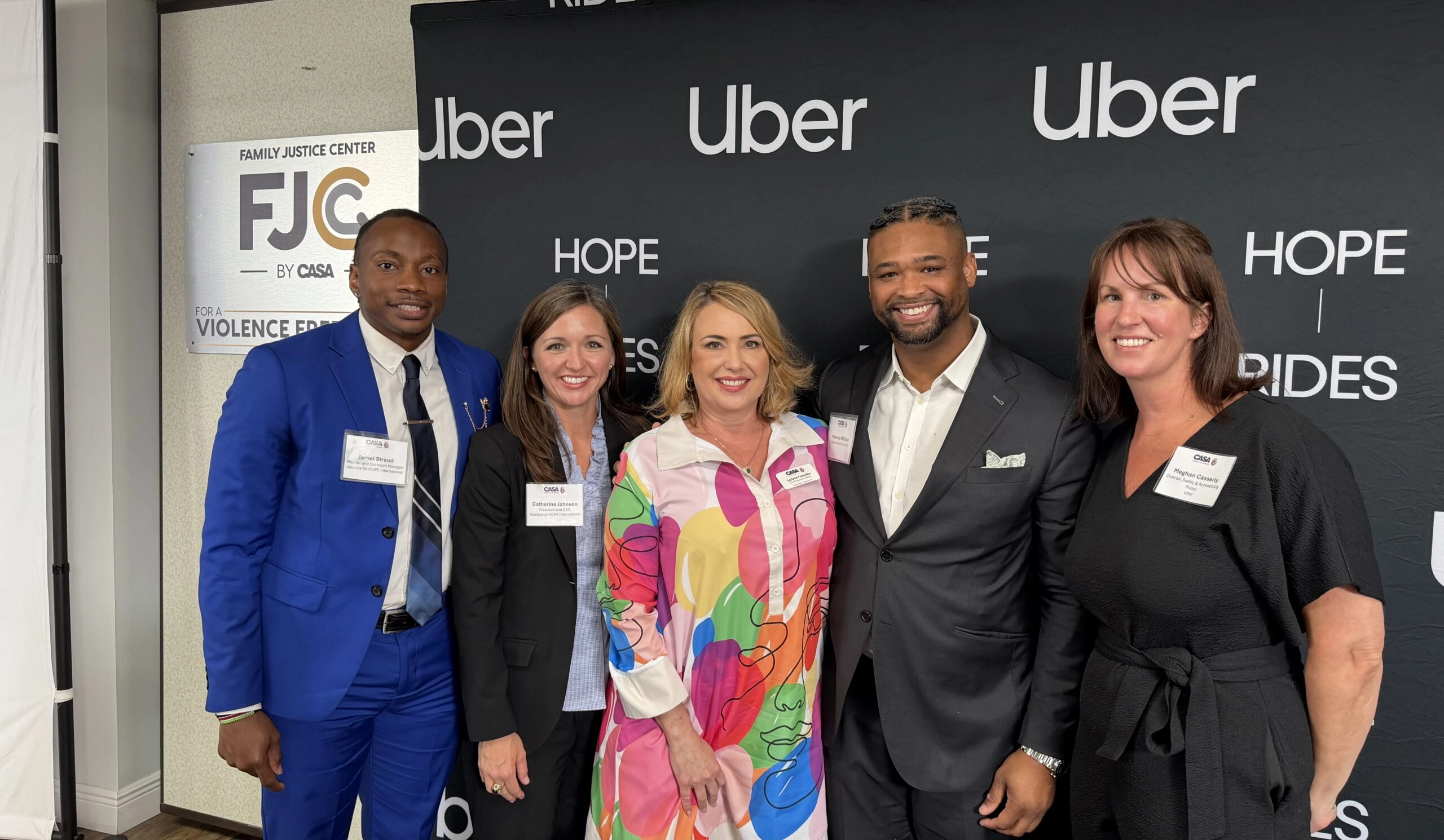
From left, Alliance for HOPE International outreach manager Jamal Stroud, Alliance for HOPE International president and CEO Catherine Johnson, CASA Pinellas CEO Lariana Forsythe, CASA Pinellas board vice chair Marcus Wilson and Uber director of public policy for safety and accessibility Meghan Casserly at the Monday event. Photo by Michael Connor.
Domestic violence survivors often refuse to seek help because of transportation challenges. Uber Technologies leaders are trying to change that.
In the summer of 2025, the Fortune 500 company partnered with Alliance for HOPE International and launched the Hope Rides program. Victims can receive free rides through Uber to get access to necessary services. This can help remove any financial burdens.
The effort is a collaboration with Family Justice Centers across the country. A diverse range of resources are provided at these facilities. They include legal counsel, law enforcement assistance, medical exams, therapy and community support.
One of the first “pilot” initiatives was a partnership with Community Action Stops Abuse (CASA) Pinellas. The nonprofit operates the only center in Florida. It is in St. Petersburg. Since launching the effort, more than 300 rides have been provided to CASA Pinellas clients.
Uber, CASA Pinellas and community leaders came together Monday to officially announce the program’s expansion to Florida. By the end of the year, Hope Rides will be implemented in 30 states.
“I think it’s about being a part of the solution,” Uber director of public policy for safety and accessibility Meghan Casserly said at the event. “There’s bus passes, cooperation with law enforcement and a number of ways to solve that transportation need. But, we know that we have a vast network of drivers who are available on demand. So, playing our part is what we are trying to achieve here.”
Ride credits are distributed to Family Justice Centers, she added, and staff members use a centralized dashboard to request rides for individuals. They do not need the Uber app.
U.S. representative Kathy Castor, who serves Tampa and St. Petersburg citizens, explained that there are a “lot of stressors” impacting local families. Consequently, it is becoming more difficult to make ends meet. This can lead to anger and sometimes violence.
“It’s so heartening to know that we are a caring community,” she said. “We provide for each other and will not let anyone fall through the cracks.”
Castor added that it takes a “greater foundation” to support survivors and give them the “confidence” they need to seek assistance. The partnership with Uber is a reflection of this.
“Transportation may seem like a simple thing to many of us, but for survivors, it can be one of the greatest barriers to getting help,” said St. Petersburg mayor Ken Welch at the Monday event. “What we are seeing today is what happens when local leadership, national partners and innovative thinking come together for a shared purpose.”
CASA Pinellas board vice chair Marcus Wilson has seen the impacts of domestic violence firsthand. His mom survived abuse.
“She immediately had to deal with the logistics of managing bus schedules and having to get to court dates,” Wilson explained. “It was a nightmare and she also had to face high expenses to order a taxi at the time.”
CASA Pinellas CEO Lariana Forsythe added that “every survivor’s journey is very different.” While their needs often vary, transportation is a key common denominator.
To exemplify, she told a story about a person who chose not to go to a courthouse because the facility’s parking garage was underground. The individual was “terrified” that their abuser was going to make an unwelcome appearance.
“This rideshare partnership meets survivors exactly where they are literally,” Wilson said. “You can order a ride in autonomy, and autonomy is everything to a survivor.”
